Saturday, May 31, 2008

At the Wrong End of the Rainbow

As of May 31, 2008 at 7:00 AM
Steps: 3,211,016
Miles: 1341.27


Grief, warm grief, it comes and stays.
The sun has left, it rains today.
Hope dies, the vessel fills with hurt.
Old wounds ache, the soul close to dirt.

The search ended, candle puffed.
All things stopped, self rebuffed.
No questions, always reasons, do not matter,
Remnants lie, never used, but all a tatter.

It is lost, what was not had.
Forever gone, hurt makes sad.
Will the soul, left in the rain,
find a way, itself regain?

Or will the vessel, sad and dark,
hear the demons glibber and bark?
The light that left, away to stay?
And plummets bleakness, it can not say.

What is lost, will not return.
The soul taught, a lesson learn.
Leave the tree that does not yeild.
Ever look to new woods and fields.

Never think, for darkness wins,
of all "the what could have beens."
It must be thought, "It can not be."
Hard to accept, the way a mistery.

Grief, warm grief, it comes and stays.
The sun has left, it rains today.
Hope dies, the vessel fills with hurt.
Old wounds ache, the soul close to dirt.

Friday, May 30, 2008

Limbo Anyone?


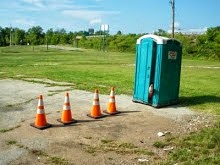
You can almost hear the cha-cha-cha as the Orange Coneheads dance

Limbo is a dance that originated on the island of Trinidad. The dancer moves to a Caribbean rhythm, then leans backward and dances under a horizontal stick without touching it.

And here, even the Stop Sign seems to be getting into the spirit.

The Sorting Orange Conehead

As of May 30, 2008 at 7:00 AM
Steps: 3,194,149
Miles: 1334.08

On January 11th of this year, I wrote about Aliens in my neighborhood that were being hunted and suffering from violence and mistreatment in an entry titled "Not for the Squeamish" and as fate would have it, not wanting to drive several miles to a place to walk, yesterday I retraced the steps I took walking that day.

While the weather was much warmer and much nicer this time around, there seemed to be little that was new, exciting, or even mildly interesting, until I came across the Short Green Square that had been partially beheaded in January as re-shown here:


Partially Beheaded Short Green Square. The red blood vessel appears to be throbbing yet.

Yesterday, the Short Green Square was, perhaps sadly, found to be nearly-beheaded with his face removed. However, grim as this news may appear, it was not all tragic for "our" Short Green Square has gone to Hogwarts!

First a wee bit of background for those that are unfamiliar with the Harry Potter story (gasp!):

The Sorting Hat, originally the pointed wizard's hat of Godric Gryffindor, was bewitched by all four of the founders of Hogwarts with brains and some amount of personality. Its function is to determine which of the four Houses each new student will enter. The four houses are Gryffindor, Ravenclaw, Hufflepuff and Slytherin.

Nearly-Headless Nick, is the nickname of the ghost of Sir Nicholas de Mimsy Porpington, a wizard who died in a botched execution on October 31, 1492. He was hit forty-five times in the neck with a blunt axe, but a half-inch of skin and sinew remained connecting his head to the rest of his body. He is the "resident ghost" for Gryffindor house.


Nearly-Headless Short Green Square under the Sorting OCHA.

Nearly-Headless Nick: Oh its so nice to see a fellow headless person!

Sorting OCHA: Hmmm... its really tough being hat for someone that's headless! Hmm... in which house should I place you??

Nearly-Headless Short Green Square: Murmble, murmurrmmmbph!

Nearly-Headless Nick: I do hope its Gryffindor! I would enjoy his company!

Sorting OCHA: Hmm... you are from Godric's Hollow... therefore I place you in... Gryffindor!

I walked away with a pleased smile on my face.

Thursday, May 29, 2008

Herman is My Man


Copyright LaughingStock International Inc.
- Distributed by United Media

A Legend from Pine Barrens

As of May 29, 2008 at 7:00 AM
Steps: 3,175,457
Miles: 1326.12


The most popular version of the Jersey Devil legend begins in the 18th century when Deborah Smith from England immigrated to the Pine Barrens in southern New Jersey to marry a certain Mr. Leeds, who wanted several heirs to continue his family name. Consequently, the new wife was continually pregnant.

After bearing twelve healthy children, she was dismayed to be pregnant with her thirteenth. She cursed the unborn child, declaring a preference to bear the Devil's child rather than another Leeds. Apparently, her wish was granted as the new child had cloven hooves, claws, and a tail. The horrific newborn proceeded to eat the other Leeds children and the parents, before escaping through the chimney to begin its reign of terror.

Some skeptics believe the Jersey Devil to be nothing more than folklore of the English settlers. The aptly named New Jersey Pine Barrens were shunned by most early settlers as a desolate, threatening place. Being relatively isolated, the barrens were a natural refuge for those wanting to remain hidden, including religious dissenters, loyalists, fugitives and military deserters in colonial times.

Such individuals formed solitary groups and were insultingly called "pineys". Pineys were further demonized after two early twentieth century studies depicted them as congenital idiots and criminals. It is easy to imagine early tales of terrible monsters arising from a combination of sightings of genuine animals such as bears, the activities of pineys, and fear of the barrens.


January 1909, saw the most frenetic period of Devil sightings ever recorded. Thousands of people claimed to witness the Jersey Devil during the week of January 16–23. Newspapers nationwide followed the story and published eyewitness reports. During this period, the Philadelphia Zoo posted a US $1,000,000 reward for the creature's capture. The offer prompted a variety of hoaxes, including a kangaroo with artificial wings. The reward remains available to this day.

Also in 1960, merchants in Camden offered a $10,000 reward for the capture of the Jersey Devil. They said they would build a private zoo to display the creature if anyone could capture it. The reward is unclaimed.

Source

So, you can make $1,010,000 by capturing a single Jersey Devil - Prospective hunters should read up and be knowledgeable before stalking their prey in hopes of getting the rewards.

Much more information is available at the world's largest New Jersey Devil website

Wednesday, May 28, 2008

Can You Feel The Burn...

...as the targeting laser makes a spot on your forehead?


Thanks to Secret Agent and Photojournalist LadyStyx who put her life on the line to take this picture.

Postcards From Me To You

As of May 28, 2008 at 7:00 AM
Steps: 3,158,514
Miles: 1318.90


Rolph's Wharf Road in Chestertown, Maryland has several farms along its 2 and 1/2 mile stretch. While spending time on the houseboat "Water's Edge", which is now joined by the "Skimmer", this past Memorial Day weekend - I walked past this "lone" tree a number times.

Majestic tree isn't it?


I had a busy weekend - the boating season is basically "good to go" after the usual annual kinks got worked out - this year we still have to work on fixing a misbehaving toilet and GPS unit - but thankfully not the engines!

"It is always something" - my much use motto certainly applies to all things marine -

Tuesday, May 27, 2008

Mile 1310 - Welcome to New Joisey!

As of May 27, 2008 at 7:00 AM
Steps: 3,140,509
Miles: 1311.24


The Christian Admiral (1964) - Torn Down

In the same year that the Pilgrims landed at Plymouth, Massachusetts, a Dutch captain, Cornelius Jacobsen Mey, explored the Delaware River and named the lower New Jersey peninsula Cape Mey, after himself, in 1620. The spelling was later changed to Cape May.

Cape May began hosting vacationers from Philadelphia (including my Great-Grandfather and Great-Grandmother!**) in the mid 1700's and is recognized as the country's oldest seaside resort. Cape May became increasingly popular in the 18th century and was considered one of the finest resorts in America by the 19th century. It is noted for its large number of well-maintained Victorian houses — the second largest collection of Victorian-era homes in the nation after San Francisco.


Emlen Physick House - Now a Museum

Emlen Physick Jr., his widowed mother, Frances Ralston, and his maiden aunt Emilie Parmentier moved into their home when it was completed in 1879.

Emlen, who never married, was descended from a famous and wealthy Philadelphia family. His grandfather, Dr. Philip Syng Physick, was considered the father of American surgery and invented numerous surgical procedures and medical instruments that are still in use today.


Glorious Beach with Lifesaving Boat

The Cape May area is also a world-famous location for the observation of migrating birds, especially in fall. With over 400 bird species having been recorded in this area and hundreds of local birders, Cape May is arguably the top bird-watching area in the entire Northeastern United States.

**My Dad's Dad's Dad.

Monday, May 26, 2008

Memorial Day

Martha Dandridge Custis Washington was the eldest daughter of Virginia planter John Dandridge and Frances Jones. At the age of 18, she married Daniel Parke Custis, a rich bachelor two decades her senior. They lived together at White House Plantation on the south shore of the Pamunkey River. She had two children that survived childhood, John ("Jacky") Parke Custis and Martha ("Patsy") Parke Custis.

Daniel Custis' death in 1757 left Martha a rich widow, with control over an inheritance for her lifetime and trustee control over the inheritance of her minor children.

Martha Custis married Colonel George Washington on January 6, 1759. Upon his marriage to Martha, George Washington became the legal manager of the Custis estate, under court oversight. Martha and George Washington had no children together.

George Washington owned over 30,000 acres of land, mostly along the Potomac River and some in the Dismal Swamp if you recall.


Arlington House, in Arlington, VA was built on a 1,100 acre estate that George Washington's step-son, John Parke Custis, purchased in 1778.

Robert E. Lee married Mary Anna Randolph Custis on June 30, 1831 at Arlington House. Mary Anna Custis' father was George Washington's step-grandson, George Washington Parke Custis. That makes Mary Anna the great-granddaughter of Martha Washington, and step-great-granddaughter of George Washington.

Thus, Robert E. Lee and George Washington were related by marriage, through the Custis family. When General Robert E. Lee headed up Virginia's Confederate Army during the American Civil War, Mary Anna fled Arlington House, and federal troops confiscated the property.


Arlington House, still stands at the top of the hill in the middle of what is now, Arlington National Cemetery where more than 300,000 US military veterans are buried, and approximately 6,400 burials are conducted annually.

Remember our Veterans on Memorial Day and everyday - and this year, we sadly have to add Jopete to the list of those to be remembered.

Sunday, May 25, 2008

Oh well...

...another of my "how to improve efficiency ideas bites the dust.


It seemed like a good idea at the time... but the boss didn't seem to appreciate my using this on a couple of his proposals.

Mile 1292 - Lewes, DE


Twenty-two years after it was discovered by Henry Hudson in 1609, the point of land separating the Atlantic Ocean from the Delaware Bay, now known as Cape Henlopen, was selected by the Dutch as a site for a whaling station. It was not an auspicious undertaking. The thirty-two settlers were massacred by a local tribe of the Lenni Lenape Indians as a result of a dispute over a Dutch coat of arms the settlers had mounted on their settlement.

In 1682, the land which now comprises the State of Delaware was conveyed to William Penn by the English Courts.

But the travail was not over yet. The town was visited by Captain Kidd and other pirates as late as 1698. And then during the War of 1812, a British frigate bombarded the town. The casualties were a wounded pig and a dead hen. One of the town buildings still proudly wears an embedded cannonball from the bombardment.


The Zwaanendael Museum, Lewes, Delaware

This museum is a showcase for Lewes-area maritime, military, and social history. Modeled after the town hall in Hoorn, the Netherlands. Can you say "Zwaanendael"?


Cape May - Lewes Ferry

More than 11 million vehicles and 34 million passengers have crossed the 17-mile mouth of Delaware Bay via vessels of Cape May-Lewes Ferry during its interesting 40-year history of operations that began July 1, 1964.

The Delaware River and Bay Authority approved the $4 million purchase of 7 ferry vessels from the Chesapeake Bay and Tunnel District. However, by the time they got a round to it, they only purchased four of seven ferry vessels at a cost of $3.3 million. Figures, huh?.

It will take me 2 and 1/2 days to "walk" across the Delaware Bay.

Saturday, May 24, 2008

Git Along Lil' Doggies

Hang on to your hat and put on yer boots Alice Kay and get ready to do some square dancin'! We are a'goin' back to Texas!

The City of Abilene owes its existence to the Texas and Pacific Railroad and a group of ranchers and land speculators. Before the railroad, the Abilene area had been sporadically inhabited by nomadic Indians and United States military personnel and later by buffalo hunters and ranchers. By the 1870s the Indians had been driven out, and cattlemen began to graze their herds in the area.

When the Texas and Pacific Railway began to push westward in 1880, several ranchers and businessmen-Claiborne W. Merchant, John Merchant, John N. Simpson, John T. Berry, and S. L. Chalk-met with H. C. Whithers, the Texas and Pacific track and townsite locator, and arranged to have the railroad traverse their own land, and that a new town would be established between Cedar and Big Elm creeks east of Catclaw Creek. C. W. Merchant apparently suggested the name Abilene, after the Kansas cattle town.

After the Texas and Pacific arrived at the site in January 1881 the railroad promoted Abilene as the "Future Great City of West Texas."


T & P Depot - 1101 North First Street, One of Abilene's most outstanding landmarks, the T&P Railroad Station was built in 1910. The construction of the Depot resulted from the efforts of local civic leaders to promote Abilene. The last passenger train left the Depot in March 1967 with only 39 passengers aboard.


Grace Cultural Center - 102 Cypress, Originally constructed in 1909 by Colonel W. L. Beckman and named for his daughter, Grace. For many years it was Abilene's premier hotel and the first sight seen by railroad passengers as they approached the city.


Hilton Hotel - 401 Pine, Built in 1927 by the Abilene Hotel Company which was owned by most of Abilene's most prominent businessmen. The hotel was leased by Conrad Hilton and was the first hotel to bear his name. Paris Hilton arrived much later.


On April 15, 1956, The Abilene Air Force Base was dedicated. On Dec. 6 that same year, the base was renamed Dyess Air Force Base in honor of Lt. Col. William Edwin Dyess.

Source


One good reason to go to Abilene is to visit the FM600 Wrecking Co. to find some cars to spindle! And after that, we will pop in on Karla!

Alektorophobia Anyone?

As of May 24, 2008 at 7:00 AM
Steps: 3,087,885
Miles: 1288.41


All I Really Needed To Know About Chickens
- I Learned From The Web...


The latin name for chicken is Gallus Domesticus.

There are over 150 varieties of domestic chickens.

Chickens were domesticated about 8000 years ago.

All domestic chickens can be genetically traced to Gallus Gallus, The Red Jungle Fowl.

Chickens come in an infinite variety of colors and patterns.

The chicken was once considered a sacred animal symbolizing the sun.

Breeds were developed to provide plumage for ceremonial costumes.

A chickens' heart beats 280-315 times a minute.

A chickens' body temperature normally runs at 102-103 degrees F.

A rooster takes 18-20 breaths a minute, a hen 30-35.

Chickens are not capable of sustained flight.

A chicken can have 4 or 5 toes on each foot.

Grocery store chickens are 5-8 weeks old.

Americans consume 8 billion chickens a year.

It takes a hen 24-26 hours to lay an egg.

A hen lives an average of 5-7 years, but can live up to 20 years. She'll lay eggs her entire life, with production decreasing every year from year one.

A chicken takes 21 days to hatch.

It takes more than 4 lbs. of feed to make 1 dozen eggs.

In 1925, hens laid an average of 100 eggs a year. In 1979, the World Record was set by a White Leghorn who laid 371 eggs in 364 days!!!

An egg starts growing into a chick when it reaches a temperature of 86 degrees F.

The first Poultry Exhibition was held in the United States on November 14, 1849. There were 219 exhibitors, 1023 birds, and over 10,000 visitors.

One trait, called Melanosis, causes chickens' bones, ligaments, skin and tendons to be colored BLACK.

Alektorophobia is the name given to the "Fear of Chickens".

Source

Friday, May 23, 2008

Oh Dear! I'm Blushing Again!


Am I ever glad the bank pad site sign blocks most of the view. These immodest trucks are ummm... making little trucks in public! And right beside the road!

Thanks to Photojournalist LadyStyx

Hold it... hold it, hold it... there is more to this story than meets the ummm... one eye.

Mile 1272 - Mount Vernon

As of May 23, 2008 at 7:00 AM
Steps: 3,068,376
Miles: 1280.40


Washington Crossing, Pennsylvania
- site of the McConkey's Ferry Inn where Washington may have slept


Chances are you've heard the adage, "George Washington slept here." There is a reason for the saying. The man got around. From Boston, MA to Charleston, SC, the man got down off his horse and snoozed for a bit. There are more places claiming he slept there, than the man had nights in which to sleep.

This website even photo-documents such places.


But while he was often away from home, a beautiful mansion called Mount Vernon, George definitely slept there...

The building of Mount Vernon was started in 1741-42 by George Washington's father, Augustine on a vacant bluff overlooking the Potomac River.

Lawrence Washington (George's half brother) received news of his father's house building plans while at Jamaica, and presumably wrote back instructing his father to call the new home "Mount Vernon" in honor of his commanding officer, Vice Admiral Edward Vernon (then regarded as the greatest military hero of the age in England.)

The farm where Washington and his family lived was called the "Mansion House Farm." This is the part of the plantation that visitors see today. Washington developed the property's current 500 acres (at its peak it was 8,000 acres) to create a fitting setting for a country gentleman. He designed the grounds to include a deep border of woods, rolling meadows, serpentine walkways, a pleasure garden, a kitchen garden,and groves of trees. Between the Mansion and the shores of the Potomac River lay an extensive park.

Since it was first opened to the public in 1860, nearly 80 million visitors (including me!) have toured Washington's home. Mount Vernon is open seven days a week, every day of the year, including holidays and Christmas.

Thursday, May 22, 2008

Wild Skies

On Thursday evening while walking I was in brilliant sunshine and it started to rain hard - the rain lasted only a couple minutes - but this is what I saw:


Heebner Park - Soccer Feilds


Just Moments Later - the rain cloud breaks up

Remember the Alamo!

This Entry is for Karla - A Side Trip to Texas


Originally named Misión San Antonio de Valero, the Alamo served as church and home to missionaries and their Indian converts for nearly seventy years. Its construction began in 1724.

In the early 1800s, the Spanish military stationed a cavalry unit at the former mission. The soldiers referred to the old mission as the Alamo (the Spanish word for "cottonwood") in honor of their hometown in Mexico. The post's commander established the first hospital in Texas in the Long Barrack. The military — Spanish, Rebel, and then Mexican — continued to occupy the Alamo until the Texas Revolution.

San Antonio and the Alamo played a critical role in the Texas Revolution. In December 1835, Ben Milam led Texan and Tejano volunteers against Mexican troops quartered in the city and when victorious, took over and strengthened its defenses, primarily the Alamo buildings.

On February 23, 1836, the arrival of General Antonio López de Santa Anna's Mexican Army outside San Antonio nearly caught them by surprise. The defenders held out for 13 days against Santa Anna's army. William B. Travis, the commander of the Alamo sent forth couriers carrying pleas for help to communities in Texas. On the eighth day of the siege, a band of 32 volunteers from Gonzales arrived, bringing the number of defenders to nearly two hundred.

As the defenders saw it, the Alamo was the key to the defense of Texas, and they were ready to give their lives rather than surrender their position to General Santa Anna. Among the Alamo's garrison were Jim Bowie, renowned knife fighter, and David Crockett, famed frontiersman and former congressman from Tennessee.


The final assault came before daybreak on the morning of March 6, 1836, as columns of Mexican soldiers emerged from the predawn darkness and headed for the Alamo's walls. Cannon and small arms fire from inside the Alamo beat back several attacks. Regrouping, the Mexicans scaled the walls and rushed into the compound. Once inside, they turned a captured cannon on the Long Barrack and church, blasting open the barricaded doors. The desperate struggle continued until the defenders were overwhelmed. By sunrise, the battle had ended and Santa Anna entered the Alamo.

Nearly all of the Texans under arms inside the fort were killed in the March 6, 1836, attack. However, almost twenty women and children were spared and allowed to return to their homes.

The Republic of Texas adopted a Declaration of Independence (from Mexico) on March 2, 1836.

Texas, the Lone Star State, became the 28th state on December 29, 1845.

Source

Flounder Fishing in Long Island

As of May 22, 2008 at 7:00 AM
Steps: 3,050,918
Miles: 1273.25


My brother holds up my fish

The weather was cold and windy at Orient Point - located at the far eastern tip of the north fork of Long Island, but the sun shined and the fish ate the bait, so all was well in the world. Captain Bob Rocchetta once again parked the fishing boat over the "X" that marked the spot where the fish were.


The hardworking mate, Kevin Terrano poses with my Dad and my brother holding up his fish!

Rainbow Charters

Wednesday, May 21, 2008

More thoughts while walking...


The sign on the truck reads, "Dave, Your Righthand Man - Handyman & Restoration"

What happened to his left hand?

Mile 1265 - Suicide Bridge

The Virtual Walker is in Delaware after 3 million plus steps!

As of May 21, 2008 at 7:00 AM
Steps: 3,032,029
Miles: 1265.51
Miles to New Jersey: 32.49

During the years when the houseboat, "Water's Edge" was berthed in Oxford, Maryland, we would, on occasion go to a restaurant in the town of Hurlock, sometimes by boat and sometimes by car. If we drove, we would go over a bridge known locally as Suicide Bridge.


Sometimes, if we went by boat we would sometimes chance into "The Dorothy & Megan" and/or "The Choptank River Queen" plying the river with a boat load of tourists.


View of the Bridge, the Restaurant and the River Boats


Dockside at the Restaurant

The sailboat (the power boaters call them "blowboats") is named the "Jus Frenz". I've never quite understood the penchant for naming boats with "cute names" but I never get tired of looking for them.


The Suicide Bridge

The Legend of Suicide Bridge goes like this:

The first victim of Suicide Bridge was a postmaster from Hurlock, who shot himself and then fell into the water of Cabin Creek.

The second victim was a farmer who also shot himself and fell into the swirling waters of the Dorchester County Creek.

Next was a man who some say willfully dove off the bridge, while others say he met with foul play. Pete Moxey, a lifelong resident of the area, was eight or nine years old when it happened.

"It's the first one I remember. A fellow they called "Frog". He was black, short and stocky. They claimed he jumped off the bridge and hit his head on the piling. But the word was going around there was foul play in it. I don't know," the 60 year-old Mr. Moxey said.

He remembers that once the body was found, "they put him on a table over there in a picnic area and did an autopsy, right out in the open." Mr. Moxey, however, was sent home before the autopsy was performed.

The original bridge was a wooden structure built around 1888. The second bridge, also wooden and only one lane, was built around 1910. The third and current bridge, which is also wooden but covered with asphalt, was built in 1967 and dedicated in January 1968. Local residents apparently have always called it Suicide Bridge.

Mr. Moxey said he was surprised at how quickly another suicide occurred after the third bridge was built.

"It was up for six months, then bingo, somebody went off," he said.
"I helped pull that guy out of the water… He had been a long-time employee at Continental Can in Hurlock and was just coming off a long vacation," Mr. Moxey said.

"Instead of going back to work, he drove here, parked his car and jumped off the bridge."

After rescuers located the body, Mr. Moxey said, the ropes got tangled and he got in his boat to help bring the body out. The body was placed on the dock.

"The blood soaked into the wood on the dock and it never washed away," said Mr. Moxey. "It was there for about five years. I tore it down and built another."

Another man, born and raised within a half of a mile of the bridge, moved away for many years, came back, parked his car by the foot of the bridge and shot himself.

"I don't think the bridge is jinxed. Maybe it's just the name that brings them here." Mr. Moxey said of the suicides.

In a more recent incident, Dave Nickerson, who lives across the creek next to the bridge, was awakened one morning by calls of "Help… help." Seeing a car parked on the bridge, he immediately jumped into his skiff and zoomed to where calls were coming from. He pulled a woman from the icy water where she had apparently changed her mind about committing suicide. Nickerson immediately took her ashore, ran to her car, which was running and parked on the bridge and drove to the skiff. When he tried to get the women into the warm car she replied, "I don't want to get the seats wets -- it's a new car!"

Source


But creepy bridge or not, the food they serve here, especially the seafood, is always top-notch.

Tuesday, May 20, 2008

Mile 1249 - Salisbury, Maryland

When you think Salisbury, you might think Salisbury Steak... and for that you can thank Doctor James John Salisbury, the inventor of the Salisbury steak, who was from mid-state New York and has nothing whatsoever to do with Salisbury, Maryland. So think again...

The Delmarva Peninsula is known for its chickens and even has a two day chicken festival... So it's fitting an entry be dedicated to the fowl.


"It takes a tough man to make a tender chicken"

Frank Perdue (May 9, 1920 – March 31, 2005), born in Salisbury, Maryland, was for many years the president of Perdue Farms, now one of the largest chicken-producing companies in the United States. His promotion of the Perdue brand through high-profile advertising resulted in its being the first well-known brand of chicken in the U.S. He turned over leadership of Perdue Farms to his son, Jim Perdue, in 1991.


Perdue developed a specialized chicken-feed that included marigold blossoms, which imparted a characteristic golden yellow hue to the skins of his chickens.

Source

Monday, May 19, 2008

Mile 1242 - Fruitland, Maryland


Fruitland traces its origins to about 1795 when a village began to cluster around an intersection known as Disharoon's Cross Roads. About 1820, the village became known as Forktown, because it was located at the fork of two roads which were used by stage coaches traveling north and south. The stage coaches would stop at Forktown, change horses and continue on their way. The place must of been very exciting in those times.

In 1873, the name of the town was changed to Fruitland because of the large number of fruits growing and being harvested in the area.


The holly tree is native to the moist woods surrounding Fruitland. Fruitland held the first and largest holly auction every year for three days in December, from the late 1890s until December 1968 when the demand for homemade wreaths decreased as artificial wreaths were manufactured.

Besides holly, mistletoe was also sold by the bushel basket at the auctions. Wreaths were sold and shipped to brokers in Baltimore, Philadelphia and Washington, DC, but sometimes were shipped as far west as Chicago.

Source

Sunday, May 18, 2008

Mile 1230 - Deal Island


A true waterman's town, Deal Island seems like a place time time forgot. The 3 mile long island is located in Maryland on the Tangier Sound. The island has three communities, Deal Island, Chance, and Wenona. Visitors will see watermen unloading the day's catch, an oyster hatchery, and crab pickers at Deal Island Harbor on the northern tip of the island.

Each Labor Day weekend for the last 40 plus years, this island community has hosted the annual Deal Island Skipjack races.

Source


Skipjack on display at the Chesapeake Bay Maritime Museum
- Saint Michaels, Maryland

The skipjack is a type of sailboat developed on the Chesapeake Bay for oyster dredging. It is the chief oystering boat on the bay, and remains in service due to laws restricting the use of powerboats in the Maryland state oyster fishery.


Workboats have their own beauty and charm

Saturday, May 17, 2008

Oh Gosh! I'm Blushing!

As of May 17, 2008 at 2:30 PM
Steps: 2,982,300
Miles: 1245.12
Miles to Delaware: 7.88

This entry is not suitable for children or adults with "sensibilities". If you are one of these, please do not read on. If fact, some adults may wish to close one or both eyes.

Recently, while walking on the Oaks Reach of the Schuylkill Canal - I encountered never before seen behavior. In order not to offend anyone and due to the delicate nature of what follows, I will avoid lengthy descriptions and stick to strictly clinical terminology.


Meeting


Expressing Interest


Mutually Agreeable


Positioning


Riding


Collapse


Sleeping

All of this happened very quickly and without any noise other than a several dull sounding thuds as they hit the ground. No moaning, groaning, grunting, screaming, or even sweating was observed. Furthermore, no shrink wrap was seen, before, during, or (thankfully) after.

As I silently slipped away to continue my walk, a very strange thing happened, I was suddenly overcome by an inexplicable urge to light up a cigarette and take a couple puffs.

I'm just going to call this, "Orange Coneheads Playing Leap Frog."