Far Side of Fifty brought this serviceman to my attention towards the end of last year - she found his photograph in an antique shop in Minnesota. It depicts a serviceman in an Army Air Force uniform taken at the Milner Studios in Albuquerque, New Mexico during WWII.
Hoping to learn something about "Peter," I investigated the photographer and found a story interesting, to me, on its own.
"Alabama Milner came to Albuquerque in 1918 with her niece and her children. Milner worked for the photographer William Walton. Algernon Milner, (Alabama's brother) bought the Walton studio in 1919 and turned the business over to his sister who was the primary photographer until her retirement in 1955. Miss Milner captured on film, important history of Albuquerque in her years as one of the city's leading photographers."
On the reverse side of Peter's photograph was this:

Peter J. Stubovage
709 East Mahanoy Avenue
Girardville, Pennsylvania
Being something of a railroad buff, I knew Girardville was created on land purchased by a very wealthy Philadelphian named Stephen Girard. Mr. Girard bought extensive properties in the mountain region of Pennsylvania knowing coal would be found there and soon the Reading Railroad would find its way there.
Today, Girardville is a typical "post" coal mining town in Pennsylvania - parts of it are rather poor and rundown, with housing for the miners that once lived there crowded together within an easy walk of the mines. It was home to John "Black Jack" Kehoe, a member of the Molly Maguires and settled by Irish and later, other immigrant families from Eastern Europe.
Typical of a Pennsylvanian coal mining town, the population soared when the mines were busy in 1910 to perhaps 4,500 people and dissipated to the little over 1,000 souls there now.
So, who was Peter J. Stubavage?
A general search of the Internet tells us this:
Peter J. Stubovage
Date of Birth: 02-Jul-1910
Date of Death: 12-Jun-1971
It tells us he was buried in the St. Vincent and St. Louis Cemetery, Girardville, Pennsylvania and his gravestone says he was a Sargent Army Air Force (AAF) WWII and that others in his family are buried with him - and his father's last name was Scerbavicius. Peter's family name is Lithuanian.
Peter and at least some of his siblings changed their family name from Scerbavicius to Stubovage, presumably after they moved from Budzyliey (near the capital city of Vilnius), Lithuania to America sometime around 1906. Lithuania, territory that Germany, Poland and Russia have disputed for centuries, was under the control of a repressive Russian Czar, Nicholas II at the time Peter's family left.
The 1920 US census taker recorded their name as Stutovage, misspelling Stubovage and making this family all the more difficult to locate.
According to records such as the census and cemetery, we learn that, Peter's father was Dominikas Scerbavicius, and he was born in 1870 in Russia and died in 1956 in Pennsylvania. Peter's mother, Anna was born in 1883, also in Russia, and died in 1948.
Peter had two older brothers, both born in Russia and died in Girardville: Adam Scerbavicius, who was born September 30, 1900 and died June 1968, and Dominic G. (Jr.) Stubovage (ex-Scerbavicius), who was born August 4, 1905. He died in June 1974.
Peter also had an older sister, Marcella Stubovage, who was born March 26, 1907 in Pennsylvania (which tells us when the family immigrated) and died in August 1991. She appears to have never married.
Brother Adam was drafted during WWI. Dominic Jr. appears to have been too young to serve in WWI and too old to have served in WWII.
Peter served in the Army Air Force in WWII and was a Sargent. He appears to have been at the Albuquerque Army Air Base at least long enough to get his picture taken. He may have worked there during the duration - or trained to support bombers there and gone overseas.
Investigating the AAF presence in Albuquerque, we find the Albuquerque Army Air Base was renamed Kirtland Army Air Field in February of 1942.
If you query the Social Security death records database - the only Stubovage's on record are Adam, Dominic, and Marcella. There are no records of any of the siblings ever getting married - or having children. The church they likely attended in Giraldville, which I contacted, has no memory of them.
When the opportunity arose, I drove to the cemetery...

...where I found Peter's father, mother and brother Adam's gravestone...

Nearby and to my left, I spotted a stone with name Stubovage on it...

It is lettered Stubovage...and it is also lettered Scerbavicius too... The stone is shared by Dominic, Marcella, and Peter.

...and then I found Peter's service marker. After I dug it out from under the encroaching sod...

...I learned he served in the 23d Air Depot Group.

Somewhat nonplussed, I then visited the Church that owned the cemetery...

...located on the northern end of Girardville, on a steep road...

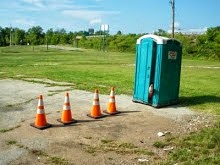
...and found no one there. I then decided to drive out the road to Peter's last known address, where I found this:

A fenced in parking lot with no sign of a house. You can imagine my dismay.
Since then, I have done some follow-up research and here is what I found out:
The information available on-line regarding the 23d Air Depot Group isn't really very clear but it appears that Peter may have served in India/China with the 20th Air Force with the 58th Air Bombardment Group (B-29s) stationed in China. The depot group left there and went to West Field, Tinian, Northern Marianas Islands in 1945. Some of the group was sent to the depot complex at Harmon Field, Guam and possibly, some were sent to Okinawa around July 14, 1945.
For a young man born and raised in Girardville, Pennsylvania - this would have been the adventure of a lifetime. Could I find someone that could tell me his story? Did Peter play a small role with the two aircraft that dropped atomic bombs on Japan, flying from Tinian?
Sadly, Peter seems to have had no living relatives, or offspring. He is a truly a Forgotten Old Soldier. Likewise, we don’t know anything about the person that this photo was intended for - Peter's good friend, Arthur. Perhaps he was a fellow serviceman - and like Peter...has been forgotten? Is being forgotten as bad as, or worse than, being an unknown soldier?
It is amazing how an immigrant family from Lithuania entered the coal regions of Pennsylvania, and there were many of them, to find a better life, to serve proudly in our armed forces, have faded away into nearly total obscurity.
I've looked for other members of the 23rd Air Depot Group and have found only a very few and all of the ones I have found, are now deceased. The number of living veterans of WWII is rapidly dwindling.
I'm afraid no one remembers Peter or his family.
I have promised to myself to remember him and the forgotten others on this Memorial Day.
Peter, and all the other servicemen and women of the United States of America, forgotten, unknown or otherwise, I thank you for your service to provide me with very precious Liberty and Freedom.