Thursday, July 31, 2008

Mile 1768 - Ogunquit, ME

I was going to write about the village of Ogunquit, Maine, a place the Abenaki Indians aptly named, "Beautiful Place By The Sea," but while some of my earliest memories (being 5 or 6 years old at the time) of Maine are of the beach here, I just couldn't get "into it."

Instead, I have been kind of lost in thought this morning. As a little boy, I would often be down the shore in the late autumn months - a time when the air has a chill in it, the breeze is unpredictable, and the sea birds are making the best of their last chances before winter comes. The sky is usually brilliant blue and for the first time in many months, without humid haze, letting you see as far as you can see.

The beach, the ocean, the sky and the horizon

I would sit on a blanket high on the beach on the sand dune - the cool sand contrasting with the warmth of the sun in my face while wearing a sweatshirt and shorts and just look out into the water. The gulls would wheel about in the sky calling to each other and on occasion, a person or two perhaps with their dog, would walk by down in the sand made firm and wet by the waves - the wind blowing up at irregular intervals would momentarily upset the birds in flight and tug at the hats the people wore.

The sound of the surf at low tide would be gentle, the crash of the water muted, and the gurgle of the water running up and down the beach soft and soothing. Migrating sandpipers would scamper along the edge of the water, trying to keep from getting wet.

The sun would shine on the water, and its rippling brilliance would be too intense to look at for long, so the eye would wander away from that and perhaps see sailboats, late season fishing boats, and ships making their way to and from where ever they were going. As I sat there growing more and more sleepy, I would look to the horizon and think to myself, what would I see if I could see all the way across to the other side?

Later, I would learn from my Dad that the country of Spain was directly across the ocean, with England and Ireland off to the left, and Iceland even further to the left. The Rock of Gibraltar would be just to the right, and the wide expanses of the Sahara Desert (filled with camels in my imagination at the time) with tribes of Pygmies in the forests a little further to the right. Africa also had Elephants, Rhinos and the stray Lion or too.

I would usually fall into a sound untroubled sleep after looking across the ocean and seeing that everything that was supposed to be there (as I imagined it) was in its proper place. Sometimes a pygmy bearing a shield and spear would be looking back at me - and wave.


While walking yesterday I was thinking about the stars overhead at night. I've often been in places blessed with nearly complete darkness, the Florida Keys for one, and have laid on my back looking up at them - just drinking in their splendor. I would note the brightest stars as they seem to seek out attention, but let them go into the whole of the sky.

I almost always marvel at how many of them their are and how many I can be looking at - but cannot see. The vast dome of the night sky makes me feel most insignificant. The huge number of stars separated by the huge distances staggers my mind and my feeble ability to hold them in place and examine them. Unlike the beach, where I can imagine what I would see, if I could but see far enough - I cannot do this with the evening sky. My thoughts usually tumble into fragments and I end up wondering why I am here - what is my insignificant role in all of this?

I end up thinking I often look without seeing - but settle myself with knowing, looking without seeing is an everyday thing for me. I can look at a person and not truly see them - the sense of sight does not let me know what thoughts are running through their minds - and the variety of such thoughts might well be as numerous as the stars, ranging from, "does my dog really like the brand of pet food I get them?", "should I dye my hair?", "this traffic really sucks today", to the more elegant ones such as "Oh! 2003 was a good year for this wine" to "the Cubs won again and that will make someone happy."

I apologize to those of you that wanted to "go" to Maine - and for the length of this stream of semi-conscious babble.

A Song In My Head

As of July 31, 2008 at 7:00 AM
Steps: 4,224,221
Miles: 1772.71

Somedays, a song just gets stuck in my head...

It's funny how you sound as if you're right next door when you're really half a world away.
I just can't seem to find the words I'm looking for to say the things that I want to say.
I can't remember when I felt so close to you, it's almost more than I can bear.
And though I seem a half a million miles from you, you are in my heart and living there.
And the moon and the stars are the same ones you see, it's the same old sun up in the sky.
And your voice in my ear is like heaven to me like the breezes here in old Shanghai.


There are lovers who walk hand in hand in the park and lovers who walk all alone.
There are lovers who lie unafraid in the dark and lovers who long for home.
Oh, I couldn't leave you even if I wanted to, you're in my dreams and always near.
And especially when I sing the songs I wrote for you, you are in my heart and living there.
And the moon and the stars are the same ones you see, it's the same old sun up in the sky.
And your face in my dreams is like heaven to me just like the breezes here in old Shanghai.


Shanghai breezes, cool and clearing, evening's sweet caress.
Shanghai breezes, soft and gentle, remind me of your tenderness.
And the moon and the stars are the same ones you see, it's the same old sun up in the sky.
And your love in my life is like heaven to me, like the breezes here in old Shanghai.
And the moon and the stars are the same ones you see, it's the same old sun up in the sky.
And your love in my life is like heaven to me, like the breezes here in old Shanghai.
Just like the breezes here in old Shanghai....

John Denver (December 31, 1943 – October 12, 1997)


A red rose

Wednesday, July 30, 2008

'Old' Hampshire - H.M.S. Victory

As of July 30, 2008 at 7:00 AM
Steps: 4,207,286
Miles: 1765.49
Miles to Finish Line: 280.51

The Virtual Walker decided to turn "sailor" for the day, and take a side trip to "Old" Hampshire, England.

The H.M.S. Victory
This is the ship that could rightly claim to be the pride of Britain's Naval forces. She is Nelson's flagship, H.M.S. Victory, the World's oldest commissioned warship, which remains more or less as it was at the Battle of Trafalgar. After seeing almost 220 years of continuous service, the Victory remains at Portsmouth's Royal Naval Dockyard, she is still manned by Officers and Ratings, and fulfils both practical and ceremonial roles for the Royal Navy.

H.M.S. Victory is beautifully preserved, retaining the gracefulness of a well-built sailing ship and still having the artillery that made her the ship that ruled the high seas and gave Admiral Lord Nelson his triumphant, final victory. Her fighting prowess is the stuff legends are made of, at Trafalgar she had 100 guns and a crew of 800 men. Victory was one of the largest warships the Royal Navy sent into battle.

Stern of the HMS Victory
The ship took over six years to build, during this time the wood from over 6,000 trees was used of which 90% was oak. She was launched in 1765 at Chatham Dockyard and was commissioned in 1778. In terms of today's value, the estimated building cost of Victory would be a staggering fifty million pounds (roughly $100 million US!) - at the time she was built costs amounted to £63,175.00 / $125,000 US.

Victory is now famous as a floating museum, visitors can see relics of Admiral Nelson and his navy as well as model ships and magnificent figure-heads. The ship combines her role as museum with that of the flagship of the Commander-in-Chief of Naval Home Command.

Red Lion Pub
This historic ship offers everyone an interesting visit, one can explore at close quarters how it was that Nelson's tactics won the Battle of Trafalgar, thus making Victory and the British Navy the envy of the world.

After a visit, one can go up the road a ways and find a place to sit and enjoy both some refreshment and the natives penchant for lovely flower baskets and pots - you may even see a dandelion and a chicken or three somewhere.

Tuesday, July 29, 2008

Can you say Llanfair...

Photograph of village sign for Llanfairpwllgwyngyllgogerychwyrndrobwllllantysiliogogogoch

While my parents were away in Wales, I came across the name of this town in their itinerary and was thinking, "Gosh, I hope when they come back they tell me how to pronounce Llanfair... oh I give up!"

Llanfairpwllgwyngyllgogerychwyrndrobwllllantysiliogogogoch - It was artificially contrived in the 1860s to bestow upon the train station the honour of having the longest name of any railway station in the United Kingdom: an early example of a publicity stunt. The village's own web site credits the name to a cobbler from the local village of Menai Bridge.

To hear the word said in Welsh go to this link and click on the grey button about 2/3 of the way down the page.

Why I Walk

To answer MarmiteToasty's question about the Virtual Walking -

I walk every day to literally keep my toes and perhaps to keep my hearing and minimize the ceaseless ringing in my ears. The threat is to the nerves in my feet and inner ear and is caused by diabetic neuropathy. With this massive motivation, I walk seven to eight miles every day around my home somewhere - and even with all the nice places to walk available, they have grown stale.

Diabetic neuropathy is a common, serious complication of diabetes. In fact, it is estimated that one out of two people with diabetes has this condition. Symptoms of this nerve damage include sensations of pain and/or numbness, tingling or "pins and needles" in the feet and hands, and can be debilitating. The nerve damage can make a person extremely sensitive to even the lightest touch. Simply wearing socks or having a foot touch a bed sheet can cause pain. The pain typically worsens at night, making it difficult to sleep. Many people with this condition have difficulty walking, working or socializing.

Untreated peripheral neuropathy may result in permanent loss of nerve function, tissue damage, and muscle atrophy. It is important to manage this condition to reduce the risk for irreversible damage and other serious complications.

To make what would be a daily grind or torment bearable, I started to record the number of steps I took along with the resultant mileage as a progress chart of sorts. It originally gave me satisfaction knowing I had made my monthly goal. Over time, this sense of reward started to pale and I turned to other ways of motivating myself to walk, especially on days when the weather was less than pleasant.

Somewhere along the line, I decided to convert the "real miles" walked into "where would I be if I had actually gone somewhere". Thus the Virtual Walker - I "walked" across the United States, going from the beach on the east coast to the foot of the Golden Gate Bridge in San Francisco and back - covering 6060 Miles (9752.6 kilometers).

I completed this "walk" last December after several years effort. I was quite happy I had finally finished the trip - I wrote of it briefly and LadyStyx had the brainstorm that the next Virtual Walk I undertook, I should share with people where I was (in a virtual sense) as I walked (in a very real sense) from time to time. So on December 3, 2007 I started a new Virtual Walk. And now, roughtly eight months later (and 119 virtual walk-related blog entries!) later, I am "in" Maine and have walked over 1758 miles.

I've learned a lot in this "voyage". I've learned about wildlife, history, geography, social events, what my friends enjoyed, where they have been and where they would like to go, and I've had a truly wonderful time sharing my walk with them. There is NO other form of encouragement that surpasses that given to me by my friends - I keep on keeping on, because of all of you - and for that encouragement I am deeply grateful.

And the good news is that while my feet hurt some days, I still have my toes after coming within days of losing them way back in June of 2005.

Monday, July 28, 2008

Why did the Chicken...

...take a boat ride? (Huh?)

A silkie chicken is a fancy breed - this one is all white except for her black beak and she has feathers on her legs that look like spats
Silkie the Boat Riding Chicken

In the truth is stranger than fiction category - this Saturday I went down to the houseboat in Chestertown to get away from it all. Around noontime, the couple that have the boat in the next slip at the dock arrived and I thought I saw a spray of white feathers but thought nothing of it. The boat 'next door' is an old wooden classic and belongs to a one-legged lady with a bionic leg, and an older gentleman (who is indeed a gentleman) named Lisa and Ted. Their boat is named "Poly and Finn" - so you can imagine the confusion at times stemming from that.

Anyway, they soon got settled and decided to take a ride out to a place along the river bank for a picnic and off they went. When they returned, I helped them dock by tossing them a couple lines and that is when I saw Silkie up on the "dashboard" eyeing the contents of Lisa's wine goblet. Lisa told me she had sampled a "nice white wine" from New York for lunch, and I asked her if the chicken was old enough to drink (she hadn't noticed it with its head in the glass, LOL) and she turned to see what I was talking about. "Silkie! no! that's mine!," she said.

So then she tells me, as I am tying on the remaining ropes, that the chicken was a "her" and still a chick, and that she had brought it along because it was new and the other chickens (they have a dozen or so) back home in the chicken coop where picking on it... it had been her father's but it had not not got along with the chickens at her father's coop. So, as Lisa put it, "Silkie is a 'rescue chicken'".

I then smiled, and asked, "So, why did the chicken go on a boat ride?" and she and Captain Ted both replied without a moments hesitation and in unison, "Because it was tired of crossing the street!" I laughed, and was opening my mouth to say more, when Lisa, who seems to know how my mind works, preempted me by saying, "And NO! Silkie doesn't have lips."

So that's the highlight of the weekend. :)

Live free or die!

As of July 28, 2008 at 7:00 AM
Steps: 4,171,970
Miles: 1750.46
Miles to Maine: 4.51

Welcome to New Hampshire


The state flag is of the following color and design: The body or field is blue and bears upon its center in suitable proportion and colors a representation of the state seal. The seal is surrounded by a wreath of laurel leaves with nine stars interspersed.

Capital City: Concord
Highest Point: Mt. Washington; 6,288 feet, 18th


The Seabrook Nuclear Power Plant, more commonly known as Seabrook Station, is a nuclear power plant located in Seabrook, New Hampshire, approximately 40 mi north of Boston and 10 mi (16 km) south of Portsmouth, NH. Initially two units (reactors) were planned, but the second unit was never completed due to construction delays, cost overruns and troubles obtaining financing. The construction permit for the plant was granted in 1976 and construction on Unit 1 was completed in 1986. Full power operation of Unit 1 began in 1990. Unit 2 has been cancelled and most of its major components sold to other plants.

The 1976 controversy involved the Clamshell Alliance, an anti-nuclear organization formed to protest the construction of the plant. Several small demonstrations at the site occurred in the lead-up to a massive occupation of Seabrook. More than 2,000 members of the Clamshell Alliance occupied the site in April, 1977. 1,414 of the activists were arrested and held for two weeks refusing bail.

New Hampshire activist Guy Chichester sawed down a Seabrook Station emergency warning siren pole, resulting in charges of "criminal mischief", a Class B felony. Although there was no doubt that he had cut down the pole, Chichester was acquitted.

In his appeal Chichester's lawyer Patrick Fleming argued that according to article 10 of the N.H. state constitution, any citizen has a right to act to protect his or herself when the state fails to do so, which is known as the Right of Revolution:
Article 10. Right of Revolution. - Government being instituted for the common benefit, protection, and security, of the whole community, and not for the private interest or emolument of any one man, family, or class of men; therefore, whenever the ends of government are perverted, and public liberty manifestly endangered, and all other means of redress are ineffectual, the people may, and of right ought to reform the old, or establish a new government. The doctrine of nonresistance against arbitrary power, and oppression, is absurd, slavish, and destructive of the good and happiness of mankind.

Sunday, July 27, 2008

Intercultural Conundrums


How much does one tip the valet when they bring your spaceship back unscratched?

What do you do when he messes with the radio and leaves Sammy Hagar's "Marching To Mars" playing?

I think I would just give him a $5 and sing along.
Here we go marching to Mars
On a rainbow bridge
It doesn't seem so far
Steppin' into our universe
Moving towards life
To solve the problems on Earth
Everybody's marching to Mars
Gonna settle down there
Get me a house and a car
Save each other from ourselves
Poke our heads out of the sand
Sayin' Here I am
Marchin' to Mars
We're marchin' to Mars....
Thanks to roving Photojournalist ChicagoLady

Saturday, July 26, 2008

K9 Capers

As of July 26, 2008 at 7:00 AM
Steps: 4,134,933
Miles: 1734.69
Miles to New Hampshire: 10.31

Punkn's recent entry concerning her scrappy little dog, Whiskey, brought to mind a recent photograph I received from Photojournalist ChicagoLady. Add a little inspiration from LadyStyx and what do you have? An entry that is a little different from the usual.

Always ready to do his master's bidding, K9, is Marvin's faithful companion.

A goofy picture of Marvin the Martian in a spacehip with the dog, K9, sitting on a sidewalk in front of the place Chicago Lady works at.

Here we see K9 tied to the "reserved parking for Marvin" obelisk while Marvin zooms off in the Maggot to do a noon-time errand.

He's a happy dog when he is left to do doggy things. Things like chewing on a rawhide bone, drinking water from muddy puddles, sleeping for hours in the shade, sniffing other doggy's butts, barking loudly and endlessly at things no human can see, and sticking his cold wet nose in unsuspecting people's crotches. Hey, he's a busy dog while he patiently waits for his master to return. And like all doggies, he will make poopies and do a bad job of covering them over.

Little does the world know, K9 actually hums to himself while doing his canine business - and to the tune of "These Boots Are Made For Walkin'" at that!

Let's all sing along with him:
Are you ready Toots?
Start walkin'
Yee Haw
come on
Let's go!

I keep sayin' I got somethin' for you
Well you folks I don't mind to say I do
Now your lookin' right where I thought you'd be lookin'
Poopin' nice when the lawns in front of you

This place is made for poopin'
And that's just what I'll do
One of these days this place is gonna be real full of poo

You believe you've slipped now for a reason (uh)
Now I'm pretending innocence just for fun
You keep standin' where I got you standin' (yeah)
These poopy piles really reek in the sun

This place is made for poopin'
And that's just what I'll do
One of theses days this place is gonna be real full of poo

Ah, catchy little tune, isn't it? I think Jopete would have streamed this one just for me.

Friday, July 25, 2008

My Parents went to Wales

...and I got this really neat Welsh flag!

Welsh red dragon on white and green flag flying from the flag pole in my front yard

So now I've something to remind me of a friend in Wales!

I stood in the yard for about 5 minutes waiting for the breeze and my camera finger to get coordinated. Getting this shot was almost as difficult as getting a squirrel picture! :)

We Salute You Sir!

Another Hero has joined God's Army

bald eagles flying over a snow covered mountain draped in with a US flag

Sargent Major Thomas J. Avery, USMC (Ret.)
September 21, 1925 - July 20, 2008

Born in Macon, GA, he was the son of the late Felix P. and Ollie Avery. Tom joined the U.S. Marines at 17 years of age and served his country proudly in World War II and the Korea and Vietnam wars, retiring as a sergeant major after more than 30 years of service. He is survived by my younger brother, his wife and her family.

He was buried today dressed in his immaculate full dress Marine uniform, folded white gloves, spotless white hat, all brass shining, and a chestful of medals.

Our salute is a genuine one even if our form is not crisp for we mean to show respect and honor to a man truly worthy of both.

I Got The Greens...

Three bright yellow dandelions shot from below so they stand out against a bright blue sky

I'm back with dandelions for those that want any.


A frog with a pencil thin mustache and white wide brim hat standing on a stage in a seedy looking bar singing a blues song to some tough looking frogs that are drinking beer and smoking
The Farside - Gary Larson

My baby's left my lily pad,
my legs were both deep-fried,
I eat flies all day and then I'm gone
they'll stick me in formaldehyde...
Oh, I got the greeeeeeens,
I got the greens real baaaaaaad...


I just got to thinking (ut-oh) that Jopete would have loved this song, and streamed it for us. Rib-bit

Wednesday, July 23, 2008

Dandelion Break

Opus sees the news on TV, shouting death, murder, and destrution, climbs off his ottoman, walks out the door, and sits in some dandelions.
Bloom County was an American comic strip by Berkeley Breathed which ran from December 8, 1980 until August 6, 1989. Mr. Breathed found dealing with the strife in the world difficult, and followed Opus out into the dandelion patch a few times himself.

Be back in a couple days.

Tuesday, July 22, 2008

Chin Strap Duck Frolics

As of July 22, 2008 at 7:00 AM
Steps: 4,086,105
Miles: 1713.90

- I'm going to be taking a dandelion break from blogging after today, tomorrow's post is on "auto-pilot" -

a brilliant blue sky, green trees, blue river running through the scene - totally peacful
A beautiful sunny summer day on the river - a time to get in and splash.


Last Sunday, I saw a group (gaggle?) of White Chin Strap Ducks bobbing for bottom plants. They must of either been hungry or the plants were really yummy. The ducks got so enthusiastic, they were splashing each other and getting each other wet. The splashed upon ducks honked their displeasure.

Monday, July 21, 2008

Ring the Bells

A while back, while thumbing through the old books and journals I had retrieved from my Dad's business before the building was closed, a note card dropped out of the 1954 general ledger of all places. On the front of it was a line drawing of Saint Margaret's, Leicester parish church.


I didn't look at it too closely, as I didn't have lots of time and then I forgot about it.


Leicester, England

What rang the old memory bell was a couple things... one quite literally was bells. While looking into the Old North Church in Boston, made famous by Henry Wadsworth Longfellow's poem titled, "Paul Revere's Ride", which begins, "Listen my children and you shall hear of the midnight ride of Paul Revere," I came across an intriguing web page on the church's bells, which were cast in 1744.

The other thing that rang a bell, was a chat I had had with someone who told me about their family tree, and how it was filled with Elizabeth's. I had to chuckle since my Mom's family was filled with Elizabeth's too. After this chat, I resolved to look into some old papers I had that outlined the family tree to count up the Elizabeth's.

I found the papers covering my dad's father's family, which came to Pennsylvania from England shortly after William Penn founded Philadelphia (some of them in around 1703 and some later in the 1820s). They were cordwainers (shoe cobblers) in the New World as there was little infrastructure here to support the trade that they had for generations in the old country. Family legend has it, they nearly starved to death, being not so good shoe cobblers and shoe salesmen.

So they built a foundry, and dug out the old trade, bell founders. Ding!


Saint Margaret's, Leicester, England

This Church was started in the mid-1100's, largely built in the 13th century and extensively rebuilt in the 15th century.


The Front Door of the Church

Picture Source

I then rediscovered the dusty old note card. What I found inside it was a typed note from Frank(lin) Mousley to my grandfather, dated March, 1954. I believe Franklin was my grandfather's uncle and he was an officer in the US Navy.

What astounded me was what the note card said. Everyone called my grandfather "Bud", I've never found out why.

"Bud: I've been to St Mrgts and explored the church records - our ancestors lived, for centuries - in St Mrgt's Parish at Humblestone and Belgrave Gates - The bells for this church were cast with the assistance of John Hose - John Hose, heir of his father (another bell founder), claimed liberties of Leicester in the year 1366 and his family came from the town of Hose (a small village outside of the city proper)"

Note: I think claiming liberty means he was a "freeman" in the time of serfdom. It may mean his apprenticeship was over. I'll look more into this.

The card continues on the reverse saying,

"William Hose [Smith]'s daughter Sarah (born 1803) married Joseph Mowsley on Christmas Day, 1826. I will mail you complete details later."

I've dug the place up from end to end, looking for what he might of sent later. So far all I've found is a picture of Franklin Mousley in his Navy uniform which I will scan in later and add to this entry.

P.s., I got so side-tracked I never did finish counting up the Elizabeth's!

Added Later:

I found a about half of "those details later". I'm still putting it together, its complicated by the fact that the men in the family liked to use the same name, generation and generation so figuring out which Joseph Mousley (there are 5 of them) is which, and which Richard Mousley (there are 4 of them!) is which is a bit of puzzle since they are numbered and the numbers apparently refer to a chart I don't have. The earliest Richard Mousley lived in "Appleby Magna, Leicester (second listing, second from the bottom)" in 1592 and was a cordwainer.

The Hose's are puzzling for the reason. Both the Hoses and the Mousleys lived in Leicester and apparently married into each other's family more than once.


Franklin Mousley - "Old Stormy Weather"

I never met this man. He was my grandfather's uncle, making him my great-great-uncle(?)

Of Swans and Ducks...

Of Swans and Ducks... Boats that is...

As of July 21, 2008 at 7:00 AM
Steps: 4,068,105
Miles: 1706.23
Miles to New Hampshire: 38.77

The Virtual Walker is leaving Boston today and will be in New Hampshire before the week is over weather permitting. The Real World Walker has been struggling with tired legs, the heat and the humidity. I've enjoyed my "stay" in Boston - its my favorite city on the east coast.

An impressionistic painting showing a pond with eight or so people on boat that is decorated to appear like a swan
Alix Porras' Impressionistic Swan Boat - Source

The Swan Boats are as much a part of Boston as the bean and the cod. They are the harbinger of Spring to native Bostonians. The Swan Boats are the only boats of their kind in the world. To the delight of the young and old each April for over 120 years, the Swan Boats have appeared in the Public Garden Lagoon. Pedal powered by their driver, they were "green" long before being green was "in".

The Public Garden, established in 1837, was the first public botanical garden in the United States. Today, with plants chosen for "ornamental excellence as well as its botanical diversity", it forms a green and flowering oasis in the heart of Boston. No visit to Boston would be complete without a relaxing stroll in the Garden and a ride on a Swan Boat.

The gardens, consisting of 24 acres, were developed from what was once marsh land, by George V. Meacham. Through the years, modifications to accommodate increasing traffic and availability of new plants have been made. Flower beds provide "glorious color from early April until the frosts of October," and thousands of plants are grown in city greenhouses are used to maintain a continuous ever-refreshing variety on display.

In 1859, by an Act of the Massachusetts Legislature, the Public Garden was preserved forever as an open space for the citizens of Boston.

Source

Black and white photo of a DUKW amphibious vehicle in USA Army colors with G I joes on board - the vehicle looks sort of like a large jeep with skirts

Boston Duck Tours operates a fleet of restored World War II era DUKWs. These amphibious vehicles played an important role in both the European and Pacific theaters during World War II. General Motors built 21,000 DUKWs during the war.

A brilliantly painted red duck boat in the water with the boston skyline behind it

...the fun begins as soon as you board your "DUCK", a W.W.II style amphibious landing vehicle. First, you'll be greeted by one of their legendary ConDUCKtors, who'll be narrating your tour and be given quacking lessons so you can quack at passers-by to say "hello!" in the finest of style.

the fleet of duck boats in the water coming out from under a bridge

The tour route includes a loop around the Boston Public Gardens and Lagoon, Boston Commons, Faneuil Hall (and City Hall), a ride up to the north end (along the Freedom Trail) past the USS Constitution and around Breed's Hill (often confused with Bunker Hill), the Museum of Science and a ride in the Charles River under the Longfellow Bridge.

It will quack you up.

Source

Sunday, July 20, 2008

Faneuil Hall


Faneuil Hall Marketplace is actually four places in one location — Faneuil Hall, Quincy Market, North Market and South Market, all set around a cobblestone promenade where jugglers, magicians and musicians entertain the passers-by.


In 1742, Boston’s wealthiest merchant, Peter Faneuil, as a gift to the city, built Faneuil Hall. The edifice was home to merchants, fishermen, and meat and produce sellers, and provided a platform for the country's most famous orators. It is where colonists first protested the Sugar Act in 1764 and established the doctrine of "no taxation without representation." Firebrand Samuel Adams rallied the citizens of Boston to the cause of independence from Great Britain in the hallowed Hall, and George Washington toasted the nation there on its first birthday.


Through the years, Faneuil Hall has played host to many impassioned speakers, from Oliver Wendall Holmes and Susan B. Anthony to Bill Clinton and Ted Kennedy, always living up to its nickname, "The Cradle of Liberty."


To better accommodate the merchants and shoppers, Faneuil Hall was expanded in 1826 to include Quincy Market, which was designed in the then-popular Greek Revival style and later dubbed for Boston Mayor Josiah Quincy. The market remained a vital business hub throughout the 1800's; but by the mid-1900's, the buildings had fallen into disrepair and many stood empty.


The once-thriving marketplace was tagged for demolition until a committed group of Bostonians sought to preserve it in the early 1970's. The 1976 renovation was the first urban renewal project of its kind.


Today, what is known as Faneuil Hall Marketplace is Boston's central meeting place, offering visitors and residents alike an unparalleled urban marketplace. The unique array of shops, restaurants and outdoor entertainment have made it a premiere urban destination that attracts more than 18 million visitors annually.

Source

Saturday, July 19, 2008

Casablanca - remade slightly...

Casablanca is an American film classic. Filmed in black and white and starring Humphrey Bogart and Ingrid Bergman - it is set in a french African colony in the early days of WWII. It contains such memorable lines as "Play it, Sam. Play 'As Time Goes By.'", and "Round up the usual suspects" - it ends with another memorable line -

As ED and Captain Louis Renault are seen from behind, slowly walking across the runway where Ilsa's plane just have left, into the darkness and enveloping fog, ED says:


"Louis, I think this is the beginning of a beautiful friendship."

I've seen this "classic" twice and I still don't understand "what happened?" and do not understand the ending of this movie.

Nor do I understand how ED (you may remember from a previous entry) now happens to have a "friend" with the same condition ED suffers from.

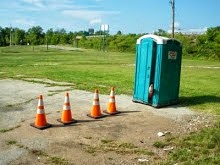
I was going to caption this "Misery Loves Company". I'm thinking the two upright cones might be Mrs. ED and Mrs Louis - but as usual, they weren't talking.

This entry extensively edited Saturday evening July 19.

The Liberty Tree


While it was many years ago that I saw the Disney film called "Johnny Tremain" I can still hear the rousing march beat of the Sons Of Liberty song saluting the Liberty Tree.

Plant the seed in our homeland, boys. Let it grow where all can see.
Feed it with our devotion, boys. Call it the Liberty Tree.

It’s a tall old Tree
And a strong old Tree
And we are the Sons
Yes, we are the Sons
The Sons of Liberty.

Save it from the storm, boys. Water down its roots with tea.
And the sun will always shine on the ole’ Liberty Tree.

[Chorus]

March along with the piper, boys. We were born forever free.
Let’s go pay the piper, boys, beneath the Liberty Tree.

[Chorus]

Pay the price they’re asking, boys. Always pay the tyrant’s fee.
Never give up the struggle, boys. Fight for the Liberty Tree.

[Chorus]

Stand for the rights of man, boys. Stand against all tyranny.
Hang the lamps of freedom, boys, high on the Liberty Tree.

[Chorus]

The Liberty Tree (1646–1775) was a famous elm tree that stood in Boston, near Boston Common, in the days before the American Revolution. The tree was a rallying point for the growing resistance to the rule of England over the American colonies.

In 1765 the British government imposed a Stamp Act on the American colonies. It required all legal documents, permits, commercial contracts, newspapers, pamphlets, and playing cards in the American colonies to carry a tax stamp.

The summer of 1765 in Boston was marked by militant citizens demonstrating against the Stamp Act. On August 14, 1765, a group of men calling themselves the Sons of Liberty gathered in Boston under a large elm tree to protest the hated Stamp Act. The Sons of Liberty concluded their protest by hanging two tax collectors in effigy from the tree. From that day forward, the tree became known as the "Liberty Tree."

When the news of the Liberty Tree spread throughout the colonies, local patriots in each of the 13 colonies formed a Sons of Liberty group and identified a large tree to be used as a meeting place. In those times, holding an unauthorized assembly was dangerous business that carried threats of imprisonment or death. The casual appearance of a group chatting beneath a tree was much safer.


During the siege of Boston, about the last day of August 1775, a party of Loyalists led by Job Williams defiantly cut the liberty tree down in an act of spite, and used the tree for firewood. This act only further enraged the colonists. As resistance to the British grew, flags bearing a representation of the Liberty Tree were flown to symbolize the unwavering spirit of liberty.

Friday, July 18, 2008

The Battle of Bumper Hill


At approximately 18 hundred hours - this is the situation - the car is parked a little too close to the slope of the lawn near the walkway steps - and a little too far from the garage door - putting the right portion of the rear bumper in a perilous position at the bottom of the hill.

At approximately 18-oh-five hours, yours truely, legs weary from walking 6 miles, is riding a red-coated lawn mower at the top of the hill - he spys tall grass growing on the slope so he decides to "hack down the enemy" on the slope.

Shouting "Charge!!!" at the top of his lungs, he rides the mower down the hill brutally beheading long rows of too-tall enemy grass - he is, in fact, totally fearless and unmindful of their "blades" pointing up at him.

At approximately 18-oh-five and 2 seconds, sweat pours from his forehead and gets into his eyes, blinding him of the danger that lurks at the bottom of the hill.

At approximately 18-oh-five and 2.5 seconds, realizing he is on a collision course with a solid green, basically immoveable object, he attempts to swerve, swear, and hit the brakes all at the same time. Unfortunately, multitasking is not his strong suit - and the legs, weary from the long march to the battlefield failed to activate the brakes sufficiently to halt the mower on its furious charge down the hill. If you must know, the swear came out beautifully.

At approximately 18-oh-five and 2.6 seconds, the mower comes to a complete thud-resounding stop.


Damage to the car was a scratch.


Damage to the mower was a dent - most noticeable near the MTD badge.

Damage to yours truely's ego - more than you might expect.

Result? Randy Travis' "Everything That I Own (Has Got A Dent)" gets a listener.

Fenway Park - a Cultural Icon

As of July 18, 2008 at 7:00 AM
Steps: 4,023,458
Miles: 1687.23


Fenway park is not far from "Mr. Smoot's Bridge"
- shown circled in Red Sox red


Fenway Park is the home ballpark of the Boston Red Sox baseball club. The park, the oldest of all current Major League Baseball stadiums, opened in 1912. The name Fenway Park comes from the stadium being located in the Fenway (swamp) district of Boston. Because of its age and constrained location in an urban neighborhood, the park has some unique features, most notably the famous Green Monster in left field.


Being the oldest ballpark in the country, it's stories and legends are legion. I would do a disservice to them trying to summarize them - and my Grandfather, in his own "Oh be that way!" manner of his, was a Boston Braves fan even though he lived only blocks from Fenway Park.

That club was founded in Boston, Massachusetts in 1871 as the Boston Red Stockings. (What is with this fetish with footwear anyway?) That team moved to Milwaukee, Wisconsin in 1953 and became the Milwaukee Braves. In 1966, that team moved to Atlanta. That team's tenure in Atlanta is famous for Hank Aaron's breaking of the career home run record in 1974; the new record stood until 2007.

The original Boston Red Stockings (Braves) team and its successors can lay claim to being the oldest continuously playing team in American professional sports. The only other team that has been organized as long are the Chicago Cubs.

But I digress... My grandfather's offspring, my mom, and my cousins that were born and raised in the shadow of Fenway Park, all say they have their priorities right, and wear and bleed Red Sox red.


Who could ever forget Carlton Fisk's homer in the 6th game of the World Series in 1975?

Or Baseball Hall of Famer Ted "the Splendid Splinter" Williams with his career batting average of .344, hitting .409 in 1941 and being overshadowed by (that *$@*! Yankee) Joe DiMaggio's 56-game hitting streak that very same year?

Or Carl Yastrzemski, Freddy Lynn, Jimmy Rice, Roger Clemens, or Wade Boggs?


The Curse of the Bambino was one of the storied legends surrounding the Beantown Red Sox. The curse was cited as a reason for the failure of the Boston Red Sox baseball team to win the World Series in the 86-year period from 1918 until 2004.

The curse was said to have begun after the Red Sox sold Babe Ruth, sometimes called The Bambino, to the New York Yankees in the off-season of 1919-1920. Before that year, the Boston Red Sox had been one of the most successful professional baseball franchises, winning the first World Series in 1903 and amassing five World Series titles. After the sale, the once-lackluster Yankees became one of the most successful franchises in North American professional sports.


The curse was put to rest in 2004 when oddball Manny Ramirez (MVP) and his teammates pulverized the Saint Louis Cardinals in four games.

I hope I've not blotched this entry too badly for those Red Sox fans.

Thursday, July 17, 2008

Woooo hooooo!


I finally got the article I was writing published! :)

How far is that in Smoots?

As of July 17, 2008 at 7:00 AM
Iggy-Steps: 4,006,333
Smoots: 1,588,649.95
Currently virtually in Walpole, MA


Map of Boston showing the Harvard Bridge
- in red and circled in green


The smoot is a nonstandard unit of length created as part of a Massachusetts Institute of Technology (MIT) fraternity prank. It is named after Oliver R. Smoot (class of 1962), an MIT fraternity pledge to Lambda Chi Alpha, who in October 1958 was used by his fraternity brothers to measure the length of the Harvard Bridge between Boston and Cambridge, Massachusetts.

black and white picture of Oliver Smoot laying down and having his feet and head marked off in chalk
Oliver R. Smoot

One smoot is equal to his height (five feet and seven inches ~1.70 m), and the bridge's length was measured to be 364.4 smoots (620.1 m) plus or minus one ear.

Smoot repeatedly lay down on the bridge, let his companions mark his new position in chalk or paint, and then got up again. Eventually, he tired from all this exercise and was thereafter carried by the fraternity brothers to each new position.

Everyone walking across the bridge today sees painted markings indicating how many smoots there are from where the sidewalk begins on the Boston river bank. The marks are repainted each year by the incoming associate member class of Lambda Chi Alpha.

250 smoot marking painted on the cement walkway on the bridge
The 250 Smoot Mark

Markings typically appear every 10 smoots, but additional marks appear at other numbers in between. For example, the 70-smoot mark is omitted in favor of a mark for 69. The 182.2-smoot mark is accompanied by the words "Halfway to Hell" and an arrow pointing towards MIT. Each class also paints a special mark for their graduating year.

The markings have become well-accepted by the public, to the point that during the bridge renovations that occurred in the 1980s, the Cambridge Police department requested that the markings be maintained, since they had become useful for identifying the location of accidents on the bridge. The renovations went one better, by scoring the concrete surface of the sidewalk on the bridge at 5 feet and 7 inch intervals, instead of the conventional six feet.

In case you are wondering, Mr. Smoot went on to have a sucessful career in technical standards and measurements in Washington DC working for the Information Technology Industry Council and served for two years as the President of the International Organization for Standardization (I kid you not) and has just recently retired.

Wednesday, July 16, 2008

End of a Walk

Just inside my front door, my shoe and sweaty socks lie on the floor where I peeled them off
Nothing feels as good as peeling off the boots after a walk... Aaaaaaaaaaaaaaaaahhhhhhhhhhhhhh...

Steps: 4,006,333
Miles: 1,679.92
Since December 3, 2007

Steps: 18,056,922
Miles: 7,740.27
Since July 1, 2005

My shoes showing completely worn out soles
And yet another pair of shoes...