Thursday, January 28, 2010

Philly Cheese Steaks (FD)

map of philadelphia showing where the cheese steak sandwich originated
Deep in the south of Philadelphia, located in an largely Italian neighborhood, at the intersections of 9th Street, Wharton & Passyunk Avenues, lies the pulsing not so culinary heart of the city. On this hardly holy ground, you will find both, the birth place and sources of the world re-known Philly Cheese Steak.

And I'm (almost, but not totally) ashamed to say, I've never been there, but the history and ongoing family and political controversies are fascinating.

So, get in line, order yourself a "Cheese Wit" or perhaps a "Cheese wit-out-insides out" while you read on.

a cheese steak
Pat's King of Steaks was founded by Pat and Harry Olivieri in 1930 when the brothers opened a hot dog stand in south Philadelphia. The brothers are generally credited as being the co-creators of the Philly Steak Sandwich.

In 1933, the brothers were busy in their hot dog stand, when they decided to try something new for lunch. I guess three years of nothing but hot dogs will do that to you - or perhaps they ran out of Ketchup.

Legend has it, Pat sent Harry to the market for some inexpensive steak. The brothers thinly sliced the steak, then grilled it along with some chopped onions. The aroma attracted a cabdriver who was a regular customer; he asked to try the dish which the brothers called a steak sandwich. So, Pat sold him a sandwich for ten cents.

Pat's King of Steaks restaraunt
Soon afterwards, the brothers started selling steak sandwiches instead of hot dogs. By 1940, they had saved enough to rent space to open a restaurant at the very same spot that they had their hot dog stand. The two brothers worked at the restaurant for 15 to 18 hours a day for the next few decades while the restaurant was open 24 hours a day.

Geno's Steak Restaraunt
By 1960s, there were other businesses in the area selling similar steak sandwiches. Long-time competitor Geno's Steaks claimed they were the first to add cheese to the recipe, though Harry Olivieri's son, Frank, claims he first added Cheese Whiz in 1950s.

The two restaurants, located diagonally across the street from each other, became cultural and culinary landmarks.

Technically, Pat's does not claim to sell cheese steaks, but steak sandwiches, although the Cheez Whiz variant is the most popular. Pat's menu is very similar to that of Geno's; both use thinly-sliced rib eye steak. Pat's chops up its meat, however, while Geno's does not.

A sign at the door explains how to order; you ask for what variety of sandwich you want and then say "wit" or "wit-out" (that is, whether you want the sandwich with or without onions), a tongue-in-cheek reference to the Philadelphia accent.

"Insides out" means to tear out (and feed to the pigeons) some of the bread found in the hearty sandwich rolls.

You can have your Cheese steak with Cheez Whiz, Provolone, Cheez Whiz, American cheese, Cheez Whiz, Swiss cheese or with Cheez Whiz, or have it "Plain" (no cheese at all).

I've never quite understood the "Cheese Steak Plain" business... I mean, its just a Steak Sandwich to me...

A "real" Philadelphia native, I'm told, orders his or hers, "Whiz, wit."

Ugh, Cheese Whiz. It's definitely a good thing that I live in the 'burbs... :)


Geno's Steaks was founded in 1966 by Joe Vento. Geno's is located directly across the street from rival Pat's King of Steaks.

According to Vento, the name Geno's was chosen because Joe's Steak Place was already being used by another business (imagine that!) He improvised the name from a broken door on which someone had painted GINO and modified the spelling to prevent confusion with a regional fast food chain called Gino's.

Vento later named his own son Geno, and the latter now works in the family business.

Both the Olivieri and Vento families have been in the news, as their extended families have opened up restaurants selling, what else? Cheese Steak Sandwiches, complete with trademark and copyright infringement suits along with claims and counterclaims of being the "one true real purveyor" of the Philly Cheese Steak.

I'm told this is authentic recipe (here) for those of you that just can't wait to get to Philadelphia to try one out.

As for me, I'm just going to have a hot dog and a soft pretzel.

Pat's King of Steaks
Geno's Steaks

Wednesday, January 27, 2010

The President's House in Philadelphia

The President's House (demolished), was formerly located on the 500 block of Market Street, and served as the official residence of the President of the United States for 10 years while the nation's capital was located in Philadelphia, Pennsylvania. Two Presidents occupied the house while in office, George Washington from 1790 to 1797, and John Adams, from 1797 to 1800.

drawing of a brick house
The house experienced many interesting moments in its use as the executive mansion. These include the signing of the Fugitive Slave Act of 1793 and the Alien and Sedition Acts. During the Revolutionary War, Benedict Arnold occupied the house when he began his betrayal.

The house is in the news once more as the National Park Service is digging at the site and is developing a much delayed exhibit, as part of the Independence National Historical Park, commemorating the house and all of its former residents, including the enslaved Africans amongst them, a man named Hercules, who was George Washington's head cook.

the green park in front of indepence hall
This picture (from here) shows the site where the house stood. Note, I didn't take this picture and do not know these people standing in the puddles.

You can also see Independence Hall, the site of the signing of the Declaration of Independence in the background. The Liberty Bell is in the long building on the right.

I'm very familiar with the site of the house as it was located where James and I got stuck pushing Karla's wheelchair in a torrential downpour on the day we went to visit the "bell". The curb where we struggled while standing a large puddle has been dug up - and happens to be right where the photographer of this picture was standing at the time they took this picture!

a black man wearing a chef's cap and apron
Anyway, Hercules was one of 9 enslaved Africans to work in the Philadelphia presidential household. The others were: Richmond (his son), Oney Judge, Moll, Austin, Christopher Sheels, Giles, Paris, and Joe - along with more than 70 white servants over the course of Washington's occupancy. Gradually, the enslaved Africans were replaced by white German indentured servants.

Hercules was "a celebrated artiste ... as highly accomplished a proficient in the culinary art as could be found in the United States." He was given the privilege of selling the extra food from the Philadelphia kitchen, which earned him over $100 a year (at a time when most people made about $100 a year).

Pennsylvania law at the time allowed the enslaved to legally obtain their freedom, provided they established a 6-month residency in Pennsylvania. To prevent this, non-resident slaveholders took their slaves out of the state before the 6-month deadline. A 1788 amendment to the law prohibited this rotation of slaves in and out of Pennsylvania.

But George Washington knowingly violated this amendment to the Gradual Abolition Law. He maintained that his presence in Philadelphia was a consequence of its being the national capital, that he remained a citizen of Virginia, and he was careful that neither he nor his slaves spent the six continuous months in Pennsylvania necessary to establish legal residency.

Hercules, however, escaped to freedom in March 1797, at the end of Washington's presidency.

About a month after Hercules' escape, Prince Louis-Philippe of France visited the Washington's at Mount Vernon in Virginia. His manservant spoke with Hercules's 6-year-old daughter, and ventured that she must have been upset that she would never see her father again. The girl reportedly replied, "Oh! Sir, I am very glad, because he is free now."

By the provisions of Washington's will, Hercules was legally emancipated in 1801, making him no longer a runaway fugitive but a free man.

Because Hercules' wife Alice had been a "dower" slave, owned by the estate of Martha Washington's first husband, their children could not be freed by George Washington's will (since legally, they didn't "belong" to George). Instead, all of Hercules' children remained enslaved, and were among the 153 "dowers" slaves divided up by Martha Washington's four grandchildren, following her 1802 death.

More information about the house is (here)

Monday, January 25, 2010

Dad's Home

Hi,

I just wanted to let everyone know my Dad came home from the hospital late Friday morning needing mostly a good night's sleep and a shave. This morning, he is doing well. My Mom and I have had to rein him in a little bit as he was eager to "get back to work".

I appreciate all the thoughts and prayers from everyone.

We had quite a scare Tuesday and thankfully the emergency responders were at the door of my Dad's place within minutes. They are your "everyday" quiet and unsung heroes and they are perhaps taken for granted sometimes - I want to thank them for their speedy and skillful response.

The rain continues to fall here - the local streams are muddy and flooded - the sky is dark and gloomy - and it's Monday to top it off - but I'm drinking my coffee thinking - its a good day as things are "back to normal".

Thursday, January 21, 2010

The 24 Hours of Le Mans

The 24 Hours of Le Mans (24 Heures du Mans) is the world's oldest sports car race in endurance racing, held annually since 1923 near the town of Le Mans, France.

Commonly known as the Grand Prix of Endurance, it runs on a course containing closed public roads that test a car and driver's ability to be quick, but also to last over a 24 hour period.

This drove engineering innovation in not only mechanical reliability but also in fuel-efficiency, since the nature of endurance racing requires as little time to be spent in the pits as possible.

The race traditionally began with the Le Mans start, in which cars were lined up alongside the pit wall in the order in which they qualified. The starting drivers would stand on the opposite side of the race track. When the French flag dropped to signify the start of the race, the drivers would run to their cars, which they would have to enter and start without assistance, before driving away.

This became a safety issue in the late 1960s when drivers would ignore their safety harnesses (seatbelts), a then recent invention, and be hurt or killed in early laps while struggling to put them on while driving.

However, in 1971 this method would be done away with as a rolling start (sometimes known as an Indianapolis start) was introduced, which has been used ever since.

With the high speeds associated with Le Mans, the track has seen a number of accidents, some of which have been fatal to drivers and spectators. The worst moment in Le Mans history was during the 1955 race when a racing car involved in an accident flew into the crowd, killing the driver (Pierre Levegh) and 84 spectators.

Last Sunday, my Dad and I went to the Simeone Foundation Museum in Philadelphia, Pennsylvania to look at nearly 100 preserved historical race cars. The museum's catch phrase is "The first race was conceived when the second car was built."

In one exhibit, there are more than a dozen, very rare, Le Man's race cars.

1927 Stutz Black Hawk
1929 Stutz Supercharged Le Mans
1929 Dupont Le Mans Speedster
1933 Alfa Romeo 8C2300 Lemans
1934 Mg K3 Magnette
1936 Aston Martin Le Mans
1936 Delahaye 135S
1938 Peugeot Darlmat Lemans
1954 Ferrari 375MM
1956 Maserati 300s
1958 Ferrari Testa Rossa
1966 Ford GT40 MK II
1967 Ford MK IV
1970 Porsche 917LH


Looking at these Le Mans contestants, it is striking how much technology has changed over four decades. The dramatic transformation between the 1933 Alfa (pictured above)and the 1970 Porsche is all due to competition. Also striking is the glossy shine!


As the competition for speed increased (the Porsche 917 was capable of 240mph), so did the use of aerodynamic design to help make the cars more stable, thus the 917LH’s long rear tail, fins and wing.

There are more pictures in Flickr if you are interested in looking.

---------------

On Tuesday afternoon, my Dad suffered a heart attack. He has been in the hospital since then, but this morning he was sitting up, reading the brochure I picked up at the car museum and talking about "all the neat cars we saw". He is eating well and the doctor says he can go home tomorrow. I can't begin to express how relieved and delighted I am to hear this news.

I want to go to many more museums and many more places we both have interests in - and there are so many we have in common - so call me selfish if you want - I'm thrilled he should be back on his feet and going places again soon.

Get all better soonest, Dad!

Tuesday, January 19, 2010

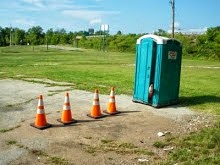
Why did the cones cross the road?

Captain Picard: "How are you feeling?"
Scotty: "I don't know. How am I feeling?"
Beverly: "Other than a few bumps and bruises I say you feel fine for a man of 147."
Scotty: "And I don't feel a day over a hundred and twenty."

I think I know the feeling...

To borrow a phase from Commander Data from Star Trek, the Next Generation, I've not been "functioning within established parameters" lately. I've gotten behind and sporadic with commenting on other's blogs. I'm not sure what's at fault or what to blame. I guess I could use some of those built-in Androidal self-diagnosis routines Mr. Data has some days. At any rate - I was sent some curious photographs lately, and thought I'd share.

a line of cones on the right side of the road with a yellow road sign saying 'cone crossing'
I got this photo from This Mom's Many Hats and altered it only slightly (and in no important detail) and was left pondering, "Why would a cone cross the street? Are they on the way to the ski lift? Do they snowboard in a half pipe?"

a line of cones on the left side of the street, heading down a slope
Mysterious business isn't it? What could they be up to? Do cones go to the movies? I know they go to outdoor rock concerts and country fairs - but in the dead of winter? Did they understand they might have been trespassing?

a cone holding a no trespassing sign
I got this photo (and the next one) from Martha of The Daily Grind. Obviously the trespassing cones upset this landowner. The mystery thickens... I do hope the cones went home via some other route.

four cones in a pizza place parking lot
Ah, well, who could resist a hot fresh triangular slice of pizza with a side of diet Pepsi (or Coke or Dr Pepper or even Fresca).

Friday, January 15, 2010

Longwood Garden's Magnificent Organ

Some of you may remember Philadelphia legend Larry Farrari (1932–1997). He was an American organist who hosted "The Larry Ferrari Show" from 1954 to 1997 on WPVI-TV in Philadelphia, Pennsylvania, USA, a weekly Sunday morning half hour program of organ music.

a huge green fern
A huge green fern grows outside the door to Longwood Garden's Ballroom.

I'm sure his spirit is smiling. Recently renovated, Longwood Garden's Aeolian Organ is once again in full magnificent operational splendor.

This is the world's largest "house" pipe organ.

In January, 1929, Pierre du Pont ordered an Aeolian organ for Longwood's new Ballroom. Designed by Longwood's own organist, Firmin Swinnen, a Belgian musician who moved to the US in the 1920s and became a prominent theater organist in New York City, the instrument was custom built in Garwood, NJ, and cost $122,700 ($1,520,879.57 in 2008 dollars).

It has 10,010 pipes divided into 146 ranks (or sets), 237 stops and couplers, five 32-foot pedal stops, and 61 combination pistons. Its 364 percussion tones include chimes, drums, cymbal, and 9-foot Weber concert grand piano playable from the organ console. A Duo-Art roll player could play the entire organ automatically.
The instrument weighs 55 tons and is installed in nine chambers that, together, are 63 feet wide, 23 feet deep, and 40 feet tall.

The chambers are located behind damask-covered openings along the north wall of the Ballroom. Wind is supplied by electric blowers totaling 72 horsepower.

the organ console with a bewildering array of knobs, lights, piano keys, and foot pedals
Moller Console, 1959

This 4-manual (keyboard) console was built 1958-59 by the M. P. Moller company of Hagerstown, Maryland to replace the original 1929 organ console. It is made of bleached mahoggany and has 244 keys and 460 controls for the hands, and 32 pedal keys and 40 controls for the feet.

The top 21 lights indicate how far open the expression shutters are, and the remaining 10 lights show when special features are activated.

a large room completely filled with organ pipes
Organ Chambers - the expression shutters are open on the far wall

Behind 2'-thick glass windows are 5,360 of the Longwood Organ's 10,010 pipes.

Five rooms of pipes are visible. An additional 4 rooms with 4,650 pipes and numberous percussion instruments are upstairs and cannot be seen. Also hidden is the Blower Room in the basement.

another room filled with organ pipes
Each pipe room ("division") is separated from it neighbor by concrete walls, except on the Ballroom side where expression shutters on 7 of the 9 rooms that can be opened and closed by the organist to control the volume.

The entire instrument is played from the console in the Ballroom, or by a computer.

another room filled with organ pipes
The glass made it difficult for me to get a clear shot of the pipe rooms, but here you can see the hundreds of pipes ranging from tractor-trailer sized mufflers on the right to little pencil-sized ones on the floor on the left.

pipes with a man dwarfed next to them, the pipes are perhaps 35 feet tall and 3 feet across
I'm sure this thing has some pretty wicked bass.

Next to the pipe rooms, there was a photographic display showing other organs of similar magnitude. I was pleasantly surprised to find I have actually heard a number of them played, including Wannamaker's (now Macy's) Department store in downtown Philadelphia with 28,482 pipes! (get a load of that console!), the Convention Center in Atlantic City with 33,114 pipes (largest and loudest in the world), as well as those in several huge cathedral churchs in Europe.

Added: A video showing the organ being played along with the outdoor fountains (here).

Monday, January 11, 2010

Longwood Gardens Holiday Display

On Friday, I left work a little early to go to Longwood Gardens to see their annual Christmas Holiday display.

two young boys in heavy coats watch a outdoor miniature train going around some evergreen trees with glowing green lights in them
There is something magical about small trains - these two young boys watched Thomas the really useful Steam Engine go around and round the track while their mother waited patiently in the cold with a younger girl in a baby stroller.

close up of thomas the train
I have to admit - I watched for a good while and felt years younger too.

the main hall in the conservatory is fulled with green grass, poinsettias and other reds, oranges, and white flowers
Inside the conservatory, the magic continued. I got there in time to see the late evening sun slowly color the sky a magnificent orange and pink sherbet. Longwood Gardens spends a considerable amount of time trying to create new varieties of flowers, orchids and poinsettias, it seems, in particular.

a dazzling walkway filled with thousands of red, white, and green flowers leading up to a 20 foot high pine tree decorated in red flowers
Last year, this hall was filled with 1,100 pounds of cranberries (pictures here). This year, it filled with 5,500 potted flowers. The bright sun was shining into this wing of the conservatory when I first got there. After strolling through the big building, having dinner, and walking the grounds, darkness came.

when it got dark, lights on the ceiling made it look like stars where shining
And the magic remains - perhaps even more breathtaking than before...

...and as always, I enjoyed the lighted fountain show. I think this is my favorite part, even if the wind was blowing loose snow from the trees and it was very cold. Hot chocolate-flavored coffee awaited in a thermos in my car.

I added a short video in the end of this one showing someone in the dark foreground "directing" the fountains with much vigor. I had to laugh - I hadn't noticed him at the time I took the video.


I'll have another entry (or two) of the gardens. This year's delightful surprise was the re-opening of the refurbished house organ with its 10,010 pipes! Some more pictures are in Flickr.

Thursday, January 7, 2010

While Watching PBS...

Recently while watching NJN (New Jersey Network) a PBS affiliate broadcasting from Trenton, New Jersey, a brief bit of video footage caught my eye. The footage was labeled "Robert Smithson's 'Floating Island' in the Hudson River" and showed a bright red tugboat pulling a rusty barge loaded with trees along the busy New York City waterfront.

New Jersey, of course, claims all the "good parts" of New York City, including the island that the Statue of Liberty stands on. While the natives 'over there' can and do debate who owns what and where the state line should be drawn, New Jersey undoubtedly has some of the finest views of the New York City skyline.

But a tugboat pulling barge full of trees? What is this? I had to find out.

Robert Smithson (January 2, 1938–July 20, 1973) was an American artist famous for his land art. Smithson was born in Passaic, New Jersey and studied painting and drawing in New York City at the Art Students League.

Two of his works, his 'Spiral Jetty' (1970) and 'Floating Island to Travel Around Manhattan Island' (1970-2005) are probably the best known (not to say well-known!) and are rather interesting, at least to me.


a pile of rocks arranged in a spiral off the shore of the great salt lake in Utah
Built of mud, salt crystals, basalt rocks, earth, and water on the northeastern shore of the Great Salt Lake near Rozel Point, a 1,500-foot-long curlicue jetty extends into lake. As the water levels rises and lowers, the salt left behind has crystallized on the dark black rocks.

Unique to say the least. So what's the deal with the barge full of trees?

Smithson was a radical who enjoyed musing on nature and the cosmos. He revered Frederick Law Olmsted, the designer of New York City's Central Park, and his floating island project called for a barge of vegetation to be towed around Manhattan by tugboat.

This can be seen as an odd, off-beat, kind of homage to his nineteenth-century land art predecessor. As Olmstead's Central Park is, in effect, an artificial model of nature, so the floating island is an artificial model of Central Park.

Floating Island being pulled from dock by red tug boat
Floating Island to Travel Around Manhattan was conceived in 1970 by Smithson but it was never realised in his lifetime.

It was thirty five years later, to coincide with a major retrospective of his oeuvre at the Whitney Museum, Smithson's miniature island finally and dramatically set sail.

Floating Island off the Ruined Pier
In September 2005, the floating island of Robert Smithson was created in about a week, in a ragged-looking barge yard on Staten Island using a 30-by-90-foot rusty barge, 10 trees, 3 huge rocks, a bunch of shrubs, rolls of sod and a whole lot of dirt.

There was no blueprint to follow except Ms. Holt's (his widow) memories and guidance and Mr. Smithson's rudimentary sketch - which was very specific in some areas, for example, specifying the island's trees were to be native to the New York region and that there should be moss growing on one boulder; yet vague in others, no dimensions; no color scheme; only a rough ideas about the topography and placement of bushes and trees that Smithson might have wanted.

Floating Island Going by Man Reading
I think the whole thing was pretty cool!

The only thing I would have done differently would have been to put an orange traffic cone on the barge somewhere. :) I found all of these photos on the Internet while looking for the story.

Spiral Jetty

The first one of the floating island came from Brain Sholis' Flickr site and he has some really interesting pictures. I'd recommend a visit if you have time.

Floating Island off the Ruined Pier

Floating Island Going by Man Reading

Wednesday, January 6, 2010

Photojournalist LadyStyx to the Rescue

Hi there!

I'll admit it. I've been in a bit of a slump lately. I think I've battened down the mental hatches in an effort to weather the current cold weather and the rocky financial shoals I find myself sailing in since the beginning of the year. The ol' creative juices have dried up so much I feel like a prune!

Some mornings, there doesn't seem like a whole lot of reason for me to crawl out from under the warm covers, and of course, it is just then I find some new pictures "flashed" to me from Photojournalist LadyStyx!

Awesome pictures showing me all sorts of wondrous and wild capers and some of the most intriguing scenes with OCHAs (orange cone head aliens) and ORBAs (orange round barrel aliens) and other aliens doing just who knows just what... and so finally, the creative mooses get a little bit of a leg stretching.

So, before going any further - I hereby award LadyStyx with another copy of the much coveted Creative Mooses award!

creative mooses award - a little moose stands on top of a bigger moose in order to eat leaves from a tree
Thank you LadyStyx!! Thank you very much!

an orange cone tied to a tree with a yellow police line tape
I simply had to tie Cappy up - he wanted to play jump rope with the gang so badly!

two orange barrels about 5 feet apart tied together at the head with a couple strings of yellow police line tape
So come on... two of us can jump at the same time!

worn out, a barrel holds a bunch of yellow tape in his head
Pick a letter... any letter... fill in a verse with a comment... Let's get the ORBAs so tired they can barely hold the ropes anymore... :)

A my name is Alice
And my husband's name is Arthur,
We come from Alabama,
Where we sell artichokes.

B my name is Barney
And my wife's name is Bridget,
We come from Brooklyn,
Where we sell bicycles.

C my name is ____
And my husband's name is _____
We come from _____
Where we sell ______.

I'll go first...
I my name is Iggy
And my wife's name is Iola
We come from Pensacola
Where we sell used beach sandals!

Monday, January 4, 2010

New Years Day Surfing

On New Year's Day, I returned to the beach. It was cold but nice enough - the wind didn't start to howl until Saturday. The local polar bear swim went off without a hitch (those crazy folks, swimming in 40F water while the windchill was claimed to be 27F!) and they raised a bunch of money for charity. I didn't take pictures of that - the Charlies and I have an agreement about me taking not pictures of nuts.


After watching the waves and seagulls for a while and waving my big bright blue "We Are Number One" foam finger to those across the pond - I wandered through the historic district to get some pictures of the old seaside cottages that are now protected by zoning regulations.

I thought of several of you while I did so.

a huge seaside cottage with wrap around porch - it probably has 30 rooms!
I could see Deanna with her feet on the railings on a (much) warmer day, drinking a nice red wine from some Waterford crystal, MarmiteToasty, with her love for white porch railings pondering where to tuck her four chickens...

close up of the wood work and painting details around the windows
...another friend that likes to paint cute snowmen and sad faced clowns (what a perfect combination!)...

the back of boat with the name a band on ship!
...and about a music-minded friend that lives in the wilds of Pennsylvania that sent me a book about a lost mining and lumbering town located in those hills that I read that night.

I'm lucky there isn't much traffic down the shore with all the daydreaming and woolgathering I was doing - I could of gotten run over!

You can see all of the cottages I took pictures of here.

On Saturday, I stayed inside and worked on a puzzle. By Sunday morning, I was more than ready to escape the cold and headed home first thing in the morning where I found a package from Wales sitting tucked inside my front door. It was the nicest way to mentally prepare for the uncertainties the new year is going to bring me.