Saturday, May 3, 2008

Pocahontas

As of May 3, 2008 at 7:30 AM
Steps: 2,705,036
Miles: 1131.44


Pocahontas - Rebecca Rolfe

Pocahontas (c. 1595 – c. March 21, 1617) was a Native American woman who married an Englishman, John Rolfe, and became a celebrity in London in the last year of her life.

She was a daughter of Chief Powhatan, who ruled an area encompassing almost the entire Tidewater region of Virginia. Her formal names were Matoaka and Amonute; Pocahontas was a childhood nickname referring to her frolicsome nature (in the Powhatan language it meant "little wanton"). After her baptism, she went by the name Rebecca, becoming Rebecca Rolfe on her marriage.

In April 1607, when Pocahontas was about 10 years old, John Smith, was captured by a group of Powhatan hunters and brought to the chief village of the Powhatan. According to Smith, he was laid across a stone and was about to be executed, when Pocahontas threw herself across his body: "at the minute of my execution, she hazarded the beating out of her own brains to save mine; and not only that, but so prevailed with her father, that I was safely conducted to Jamestown"

When the injury from the gunpowder explosion forced Smith to return to England in 1609 for medical care, the English told the native Powhatans that Smith was dead. Pocahontas believed Smith was dead until she arrived in England several years later.

In 1616, the Rolfes traveled to London, England, accompanied by a group of around eleven other Powhatan natives. The Virginia Colony's sponsors used Pocahontas as an enticement and as evidence to convince people in Europe that the New World's natives could be tamed, and the colony made safe. John Smith was living in London at the time, and Pocahontas learned that he was still alive. Smith did not meet Pocahontas, but he wrote a letter to Queen Anne urging that Pocahontas be treated with respect as a royal visitor, because if she were treated badly, her "present love to us and Christianity might turn to...scorn and fury", and England might lose the chance to "rightly have a Kingdom by her means".

In March 1617, Rolfe and Pocahontas boarded a ship to return to Virginia. However, before the ship even left the River Thames Pocahontas became ill. She was taken ashore and died. Her funeral took place on March 21, 1617 and the site of her grave is unknown, but there is a life-size bronze statue of her at St George's Church in Gravesend, England.

Source

Friday, May 2, 2008

OCHA Rustling


Cylon "By Your Command" Ranch

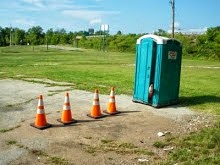
In an event right out of the old West, a Pennsylvania man was indicted by a grand jury for OCHA rustling and unlawfully branding OCHAs.


Be Careful "Caution" Ranch

According to the grand jury indictment, the man allegedly rustled an unspecified number of OCHAs from the State's highways some time prior to April 1, 2008, and on the same day or shortly thereafter, reportedly he branded them.


Wet Floor No Mop Ranch

Back in the days when OCHA laws were first enacted in the 1880s, stealing someone else's OCHAs was a hanging offense.


Crazy Bar Falling People Ranch

Times have changed and so has the punishment. OCHA rustling, called larceny of OCHAs in the law books, is a third degree felony and unlawful OCHA branding is a fourth degree felony. The unidentified man faces up to three years in prison for the larceny of OCHA charge and up to one and one-half years in prison for the unlawful branding charge, if convicted and sentenced to the maximum amount of prison time allowed by the law. Beside the four and one-half years in prison, he also faces up to $10,000 in fines.


We Need Better Glasses - Can't Read It Ranch

Captain John Smith

As of May 2, 2008 at 8:00 AM
Steps: 2,685,835
Miles: 1123.56


Captain John Smith

Captain John Smith (1580–June 21, 1631) was an English soldier, sailor, and author. He is remembered for his role in establishing the first permanent English settlement in North America at Jamestown, Virginia, and his association with the Native American girl Pocahontas during an altercation with the Powhatan Confederacy and her father, Chief Powhatan.

John Smith was apparently a troublemaker, and Captain Christopher Newport (in charge of the three ships that sailed into Jamestown) had planned to execute him upon arrival in Virginia. When they landed on Cape Henry on April 26, 1607, sealed orders from the Virginia Company were opened. They designated Smith to be one of the leaders of the new colony, forcing Newport to spare his life.

Smith explored and mapped the Chesapeake Bay region between 1607 and 1609 and search for badly-needed food and the much sought route to India, covering an estimated 3,000 miles. He became president of Jamestown in September 1608 and instituted a policy of discipline, encouraging farming with a famous admonishment: "He who does not work, will not eat."

Jamestown grew under his leadership. During this period, Smith took the chief of the neighboring tribe hostage to secure the peace. A year later however, full-scale war broke out between the Powhatans and the Virginia colonists. Smith was seriously injured by a gunpowder burn after a spark landed in his powder keg. He returned to England for treatment in Oct. 1609, and never returned to Virginia.

In 1614, Smith voyaged to the coasts of Maine and Massachusetts Bay, and named the region "New England". Smith then returned to England spent the rest of his life writing books which encouraged more Englishmen and women to colonize the New World with the comment, "Here every man may be master and owner of his owne labour and land...If he have nothing but his hands, he may...by industrie quickly grow rich." -- He died in 1631.

Source

Next time: Rebecca Rolfe!

Thursday, May 1, 2008

Mile 1112 - Norfolk and the Nauticus


The Nauticus

As of May 1, 2008 at 8:00 AM
Steps: 2,666,743
Miles: 1115.73

Norfolk was founded around 1635 and is located in the Hampton Roads region, named for the large natural harbor of the same name located at the mouth of Chesapeake Bay. One of the oldest of the Seven Cities of Hampton Roads, Norfolk is considered to be the historic, urban, financial, and cultural center of the region.

The city has a very, very long** history as a strategic military and transportation point. Norfolk is home to both the Norfolk Naval Base, the world's largest naval base, and the corporate headquarters of the Norfolk Southern Railway. As it is surrounded by multiple bodies of water, Norfolk has many miles of riverfront and bay front property.

**The settlers of Jamestown came through here in 1607.

It is also the home of the Nauticus!

What is a Nauticus? It is a museum with big boats, an aquarium, public gardens, and a whole lot to see.


BB 64 - the Battleship Wisconsin

Given the very large Navy presence in the Hampston Roads area, its fitting there be a battleship on public display.